Bitless bridle in dressage — which countries allow it in 2026?
Dele
The rules around bitless riding in competition are changing fast — and for the first time, riders in several countries can now start in a bitless bridle at officially recognised dressage shows. As a certified Bereiterin FN with nearly 20 years of experience and the founder of CR Harmonyequestrian, I've watched this shift build for a long time. Here's where things stand in 2026 — country by country.
Why this matters right now
For years, the bitless bridle was confined to trail riding, recreational hacking, and the occasional natural horsemanship demonstration. Serious competitive riders were told it simply wasn't allowed — full stop. That narrative is unravelling. National federations across Europe are updating their rulebooks, driven by growing scientific evidence on bit-related pain and a broader cultural shift toward horse welfare in sport.
If you're considering making the switch — or if you're already riding bitless and want to know where you can compete — this is the overview you need.
Countries where bitless bridles are permitted in competition (2026)
🇳🇱 Netherlands — the most progressive in Europe
The Netherlands remains the clear frontrunner. The KNHS (Royal Dutch Equestrian Federation) has allowed bitless competition for years, and as of 1 April 2025, the permitted level was raised to ZZ-Zwaar — the equivalent of German M-level, British Advanced Medium, or US Fourth Level. Both horses and ponies qualify. This is a significant milestone: bitless riders can now compete at a genuinely advanced level within a recognised federation framework.
The KNHS has also long permitted snaffle-only competition up to Grand Prix. The Dutch approach is simple: give riders the choice, and let the horse's way of going speak for itself.
🇩🇰 Denmark — welfare-driven reform
Denmark has undergone one of the most dramatic rule overhauls in European equestrian sport. Since 1 January 2025, nosebands are optional at all dressage levels, and riders at lower levels may compete in a bitless bridle. From September 2025, the double bridle is banned below level 4. The Danish Equestrian Federation explicitly frames these changes as welfare-led — a refreshing institutional position.
🇫🇷 France — new opening from January 2026
The French Equestrian Federation (FFE) introduced a meaningful update effective January 2026: bitless riding is now officially permitted at Club, Elite Club and Pony level in "free" (open/freestyle) tests. Permitted equipment includes sidepull, rope halter and similar designs — hackamores are explicitly excluded. Points are not awarded in these classes, but this is the first official recognition of bitless within the FFE's competitive framework.
🇦🇺 Australia — jumping and eventing, not dressage
Equestrian Australia permits bitless bridles in showjumping and eventing (both the showjumping and cross-country phases). Dressage remains off-limits at EA-affiliated events. Bitless is also allowed in endurance, cowboy dressage, trail and various club disciplines. For dressage riders, the situation hasn't changed — but it's worth watching as global momentum builds.
🌐 FEI — international competitions
The FEI (Fédération Equestre Internationale) currently prohibits bitless bridles in all international dressage at every level. This covers all FEI-recognised shows worldwide, including CDIs and Championships. Rule revisions are underway for 2026/2027, but bitless is not yet formally on the agenda.
Countries where bitless is not yet permitted in affiliated dressage
- Germany (FN/LPO): No bitless competition in LPO dressage at any level. The 2026 LPO amendments introduced several welfare updates — but bitless remains excluded. This is what the advocacy work I've been contributing to aims to change.
- United Kingdom (British Dressage): Not permitted at BD-affiliated competitions. Unaffiliated shows are not bound by BD rules and many welcome bitless entries.
- USA (USEF): USEF rules require a bit in recognized dressage competition. Bitless is permitted in western and trail disciplines.
- Austria, Switzerland, Belgium: Follow FEI and national federation rules; no current provision for bitless in affiliated dressage.
What this means for you as a rider
If you're in the Netherlands, Denmark, or France and you've been hesitating to make the switch because of your competitive future — that hesitation is no longer justified. You can ride bitless and still compete. The question is no longer whether it's possible, but how to do it well.
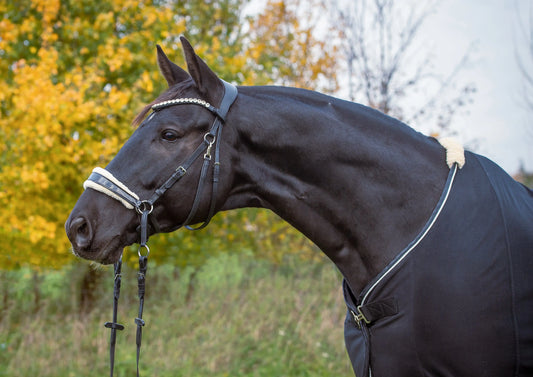
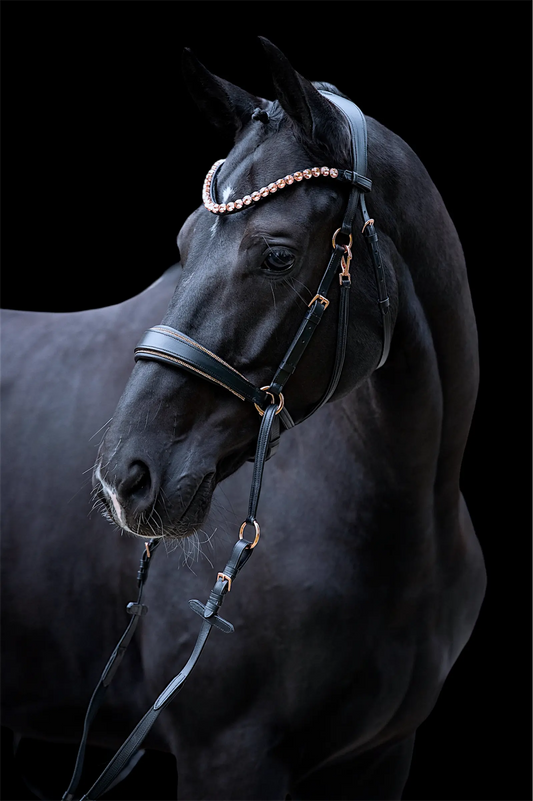
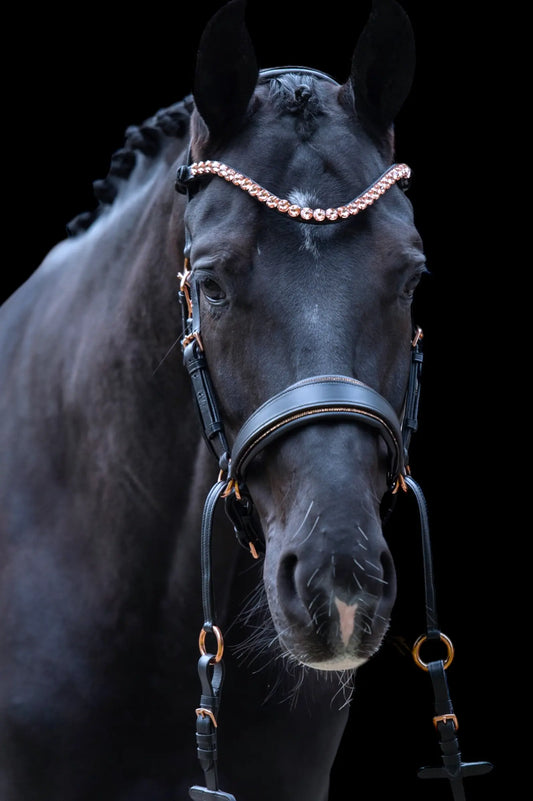
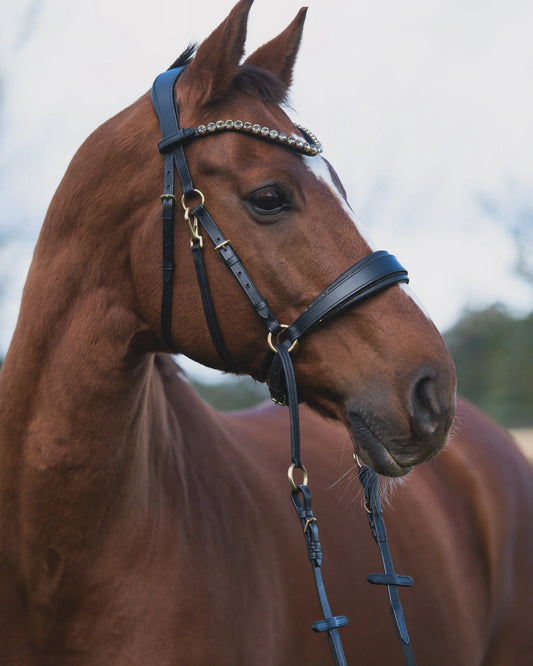
Bitless riding done right requires a well-fitted bridle that communicates clearly without creating diffuse pressure across the poll and nose. The Crharmonybridle — my 3-in-1 bitless bridle — was designed with exactly this in mind: three independent configurations (Sidepull, Crossover, Kinn) in one bridle, adjustable from pony to warmblood, handcrafted for horses that deserve precision over pressure.
If you're new to bitless riding or considering it for the first time, I've also written a comprehensive ebook covering the biomechanics, the bridle types, the training approach, and how to make the transition without losing quality in your work.
The science behind the shift
The regulatory changes happening across Europe are not arbitrary. They're being driven — slowly, but genuinely — by peer-reviewed research. Studies by Dyson et al. (2018, 2021) documented measurable signs of oral pain in horses under bit contact. Dalla Costa et al. (2014) developed the Horse Grimace Scale, giving riders and researchers a reliable tool to assess discomfort. Tuomola et al. (2019, 2021) demonstrated that bitless bridles produce significantly lower poll and noseband pressures than conventional tack.
These studies don't argue that bits are always wrong. They argue that pain is a welfare issue that belongs in the conversation — and that riders and federations have a responsibility to take it seriously.
I've long believed that the aids must whisper, not shout. A well-schooled horse in a well-fitted bitless bridle is not a compromise. It's an aspiration.
Stay updated
The regulatory landscape is changing quickly. If you want to stay informed — about rule changes, bitless training, and the science behind it — subscribe to my newsletter Bitless Dressage Science or follow me on Instagram at @crharmonyequestrian.
Die Hilfen müssen flüstern.
— Cathryn Rippelbeck, Bereiterin FN